
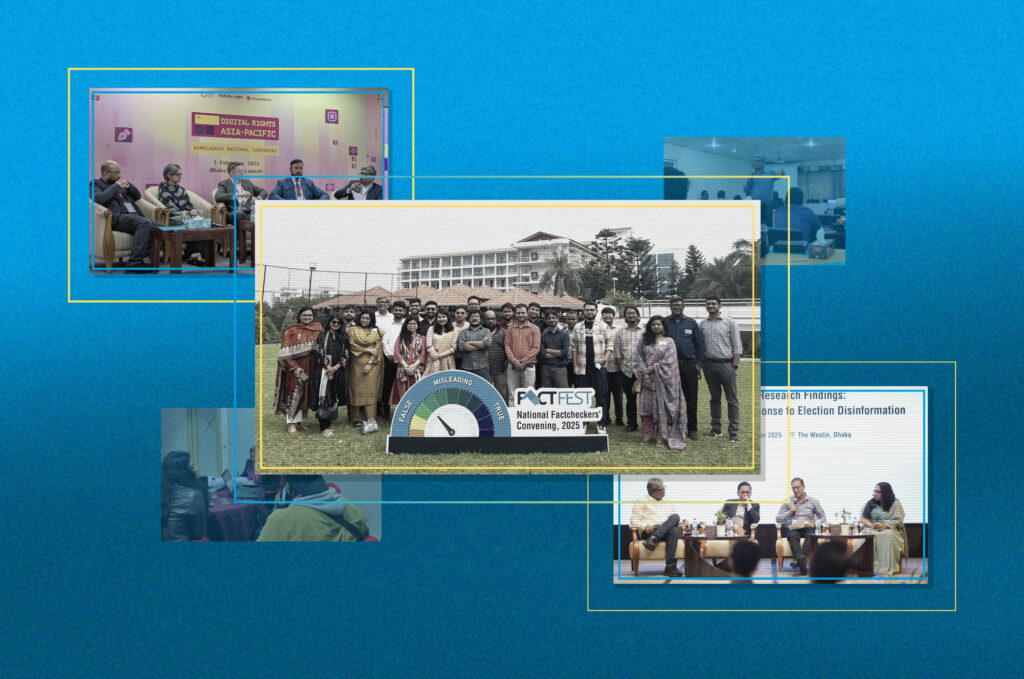
The year asked, more of the work we had already built.
By the beginning of 2025, Bangladesh’s digital space was under visible strain. Political uncertainty was deepening. An election was approaching as a force already shaping online behaviour, pressure on the media, and public trust. At the same time, a wave of new digital policies entered into force, easing certain speech-related offenses and restricting the use of internet shutdowns, while also raising concerns about centralized internet governance, surveillance, and the protection of privacy.
For us at Digitally Right, the year demanded response rather than reflection. Online disinformation and hate driven by polarized politics and external influence, along with a widening range of physical and digital threats facing journalists and civic actors ahead of an election, shaped much of our work. On the policy and digital rights front, we built new partnerships, expanded existing programs, and deepened collaboration at the local, regional, and global levels. It became the busiest year we have known, not because we set out to do more, but because the moment required it.
Half-a-dozen research, two conferences, two 6-month long fellowships, 15 training sessions for more than 200 journalists, civil society representatives and election observers, and seven advocacy dialogues can only capture one part of the year. These numbers are just one indicator. Much of what mattered lay in the processes and systems we strengthened: direct safety-supports to many that our Digital Safety School provided, the intellectual contributions we made in global and local policy spaces, and Dismislab’s steady flow of investigations and reporting. Above all, the trust placed in us by the communities we serve cannot be measured in counts.
Below is a glimpse of what the year looked like at Digitally Right – the work we took on, the spaces we created, and the collaborations that helped carry it forward.
Election Response: Research, Safety, and Engagement
As Bangladesh moved toward national elections, DRL’s work increasingly centered on election-related digital risks affecting journalists, election observers, and political actors. The response combined research, capacity-building, and targeted stakeholder engagement.
Research outputs informed this approach. In collaboration with the Fojo Media Institute, DRL published High Risks, Low Preparedness: Journalist Safety in 2026 Elections, documenting threats faced by journalists and gaps in institutional preparedness. Separately, Tackling Disinformation in Elections in Bangladesh, supported by The Asia Foundation, examined patterns of election-related disinformation and collective response mechanisms. Both studies were used to inform training programs and stakeholder discussions.
In November, DRL convened a discussion involving thirty stakeholders to review election disinformation findings. This was followed by a roundtable with representatives from major political parties, focused on online conduct and platform-related risks during elections. DRL also facilitated a session with Meta for female political party members, addressing platform safety features and responses to online harassment.
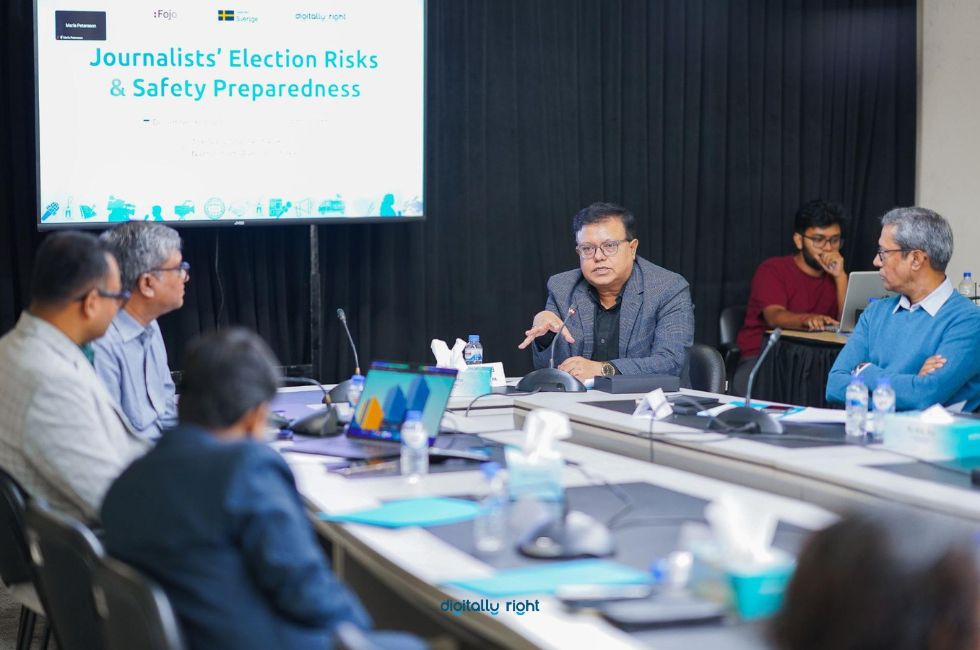
Journalist safety was addressed through newsroom-level engagement. In December, DRL convened sixteen senior editors and newsroom managers to discuss findings from High Risks, Low Preparedness, with emphasis on organizational responsibility, internal protocols, and preparedness measures.
The Digital Safety School supported election preparedness through training and direct assistance. During the year, it delivered fifteen trainings reaching over 190 journalists and election observers (137 male, 54 female). Four of these were three-day residential programs designed for journalists covering elections, combining digital safety, information verification, and physical safety components. Additional sessions supported election observer training, reaching more than 50 observers.
To provide ongoing assistance, the Digital Safety School operated a help desk throughout the year. It received 36 calls and messages from journalists, university teachers, politicians, and others seeking digital safety support. Fourteen of the individuals who sought support were women. The School also published 27 digital safety resources online to supplement training and provide continued access to guidance.
Countering Disinformation: Dismislab
Political instability and election-related narratives contributed to an increase in misleading and false information during 2025. In response, Dismislab expanded its fact-checking and investigative output.
During the year, Dismislab published 292 fact-checking articles, compared with 182 in 2024. Coverage focused on political misinformation as well as false or misleading claims related to law and order, religion, and disasters. In addition to routine fact-checks, Dismislab produced at least 24 investigative reports and analytical pieces examining misinformation trends, religious and communal hate, online fraud, and online harassment targeting women politicians and activists. Some of our stories made headlines and sparked discourse particularly around the threats and risks of AI generated disinformation in the 2026 elections.
Over the course of the year, Dismislab’s work was cited in 220 national and international media reports and referenced in research publications by multiple international institutions. The work was also presented at international forums, including DisinfoEU 2025 in Slovenia and the Global Investigative Journalism Conference in Kuala Lumpur. Dismislab also provided technical support to a fact-checking training workshop organized by Bondhushava, a community initiative of Prothom Alo, for about 100 young participants.
Building Connections: Convenings and Multi-Stakeholder Engagements
2025 was also a year of connecting, and collaborating. DRL organized several key multi-stakeholder convenings that brought together civil society, media, government, and international actors.
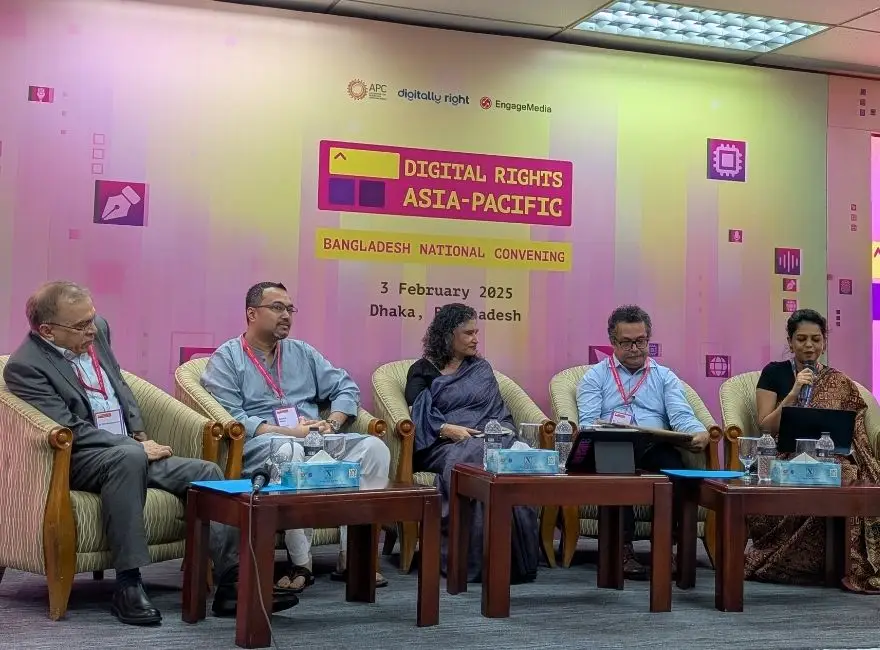
February saw the DRAPAC Bangladesh National Convening, organised in collaboration with Association for Progressive Communications (APC) and EngageMedia, a dynamic forum attended by seventy participants from civil society, media, government, and international organizations. The discussions were grounded in the urgency of the moment, aimed at strengthening networks that could respond effectively to emerging digital rights challenges.
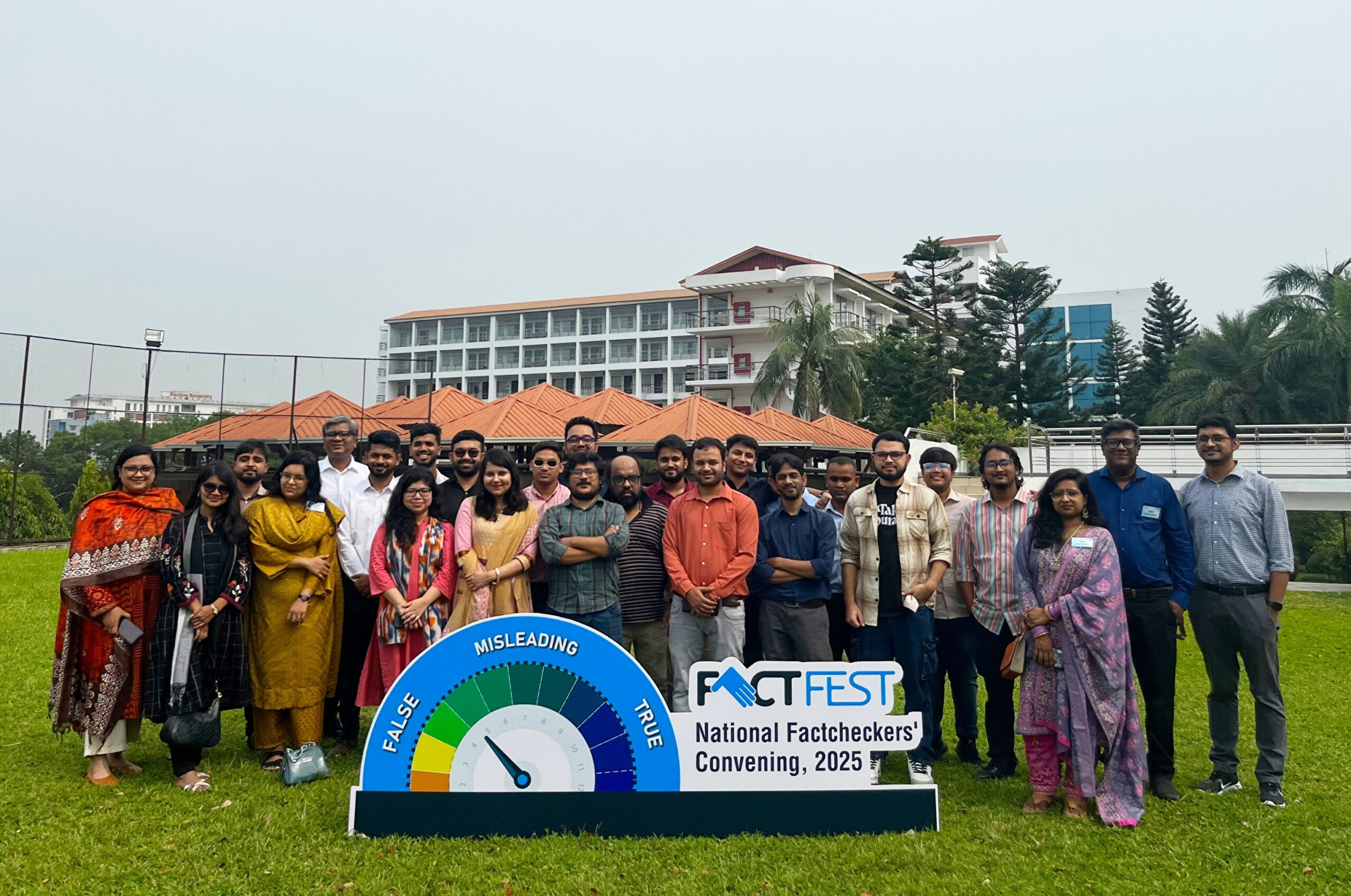
April brought the Factfest: National Fact-Checkers’ Convening, which gathered 23 fact-checkers from across Bangladesh. Participants exchanged strategies, strengthened verification practices, and fostered collaboration to tackle misinformation and disinformation nationwide.
In June, DRL actively contributed to the WSIS+20 Stakeholder Consultation Workshop, part of the global effort to shape the Twenty-Year Review of the World Summit on the Information Society. This engagement provided a platform to discuss national priorities, share experiences, and explore strategies for inclusive, accountable, and rights-respecting digital governance.
Inspired by the WSIS+20 consultation, DRL, in partnership with iSocial, brought together nine civil society organizations to form an alliance focused on identifying national priorities for digital governance. These efforts reinforced our belief that building community, collaboration, and shared understanding is as important as training and research, laying the foundation for collective action in a rapidly evolving digital environment.
Research and Partnerships
Beyond election-related work, DRL continued its long-term investment in digital rights and governance through its flagship Tech Policy Fellowship, supported by AccessNow. The fellowship nurtures emerging researchers and practitioners working at the intersection of technology, rights, and governance. In 2025, DRL published the second volume of Tech Policy Fellowship research, while the third cohort successfully completed their research for publication, ensuring the fellowship’s continued contribution to rights-focused tech policy discourse
Through the PORCH Project with Internews and partners in India, Sri Lanka and Nepal, DRL examined digital rights experiences of young people and women in Bangladesh, India, Nepal, and Sri Lanka. The resulting report, Tech Policy in South Asia: An Evolving Landscape, analyzed the impact of legal and policy frameworks on expression, privacy, and online safety.
DRL also contributed to the WSIS+20 Bangladesh country chapter, outlining national perspectives and engagement priorities. In collaboration with the Open Observatory of Network Interference (OONI), DRL reconstructed a verified timeline of internet shutdowns during the 2024 uprising, documenting enforcement patterns and impacts on access to information and human rights.
A joint research project with Bangladesh Mahila Parishad is also underway. Titled “Understanding and Addressing TFGBV in Bangladesh,” the study maps technology-facilitated gender-based violence, emerging trends, platform risks, and the legal and policy landscape. Using surveys with 500 respondents, expert interviews, and in-depth follow-ups, the research will provide recommendations to strengthen safeguards, improve responses, and enhance both state and platform accountability.
DRL participated in international forums including RightsCon, IGF Norway, DRAPAC Malaysia, GIJC Malaysia, and #Disinfo2025 These engagements focused on knowledge exchange and collaboration rather than programmatic delivery.
The list of our partners and supporters only grew longer in 2025. We are grateful that AccessNow, Luminate, Fojo Media Institute, The Asia Foundation, Global Network Initiative, Global Partners Digital, Association for Progressive Communications, EngageMedia and European Partnership for Democracy had trust in us and we are only what we are for these collaborations.
Looking Ahead
As Bangladesh approaches a pivotal election, DRL also finds itself at a turning point—ready to grow, adapt, and take on new challenges. During this period, we carried out extensive work on journalist safety, election observers, and stakeholder engagement and we hope to continue in the same spirit in the days ahead.
The events of 2025 reaffirmed that digital rights, safe participation, and information integrity are essential. To our team, partners, and communities: your commitment and trust fuel this work, and together we will continue building safer, more resilient digital spaces in 2026.