
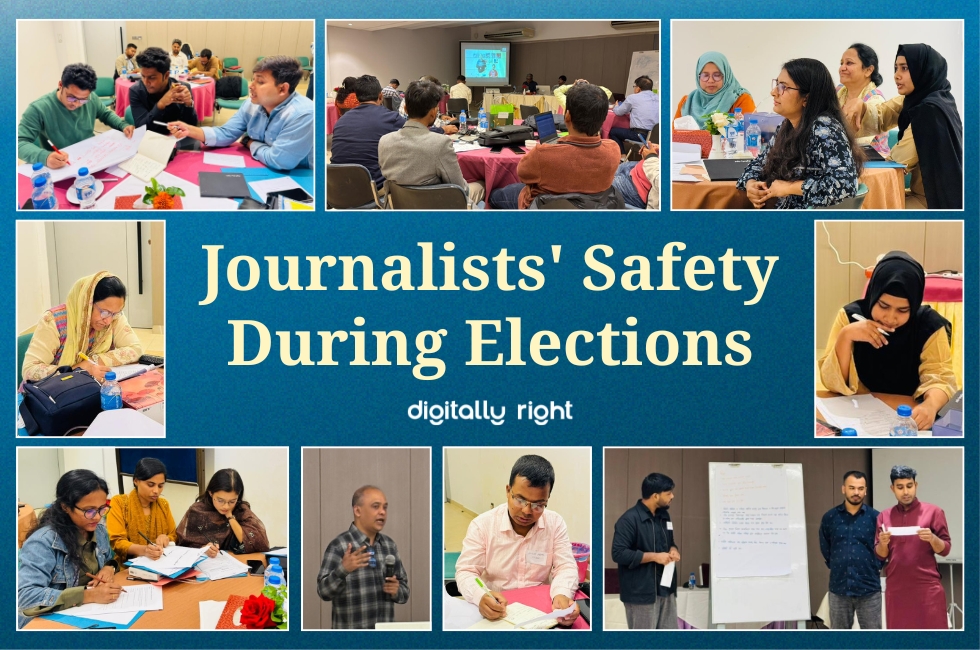
Digitally Right Limited (DRL) recently concluded four residential training cohorts titled “Journalists’ Safety during Elections.” The training was organised with the support of the Swedish Embassy and Fojo Media Institute under the “Media Safety in the Digital Age” project. Held from December 12 to 21, 2025, at the BRAC Centre for Development Management (BRAC CDM) in Savar, these trainings were specifically designed to address the multifaceted threats journalists face during election cycles, ranging from physical violence and state surveillance to the digital weaponization of disinformation.
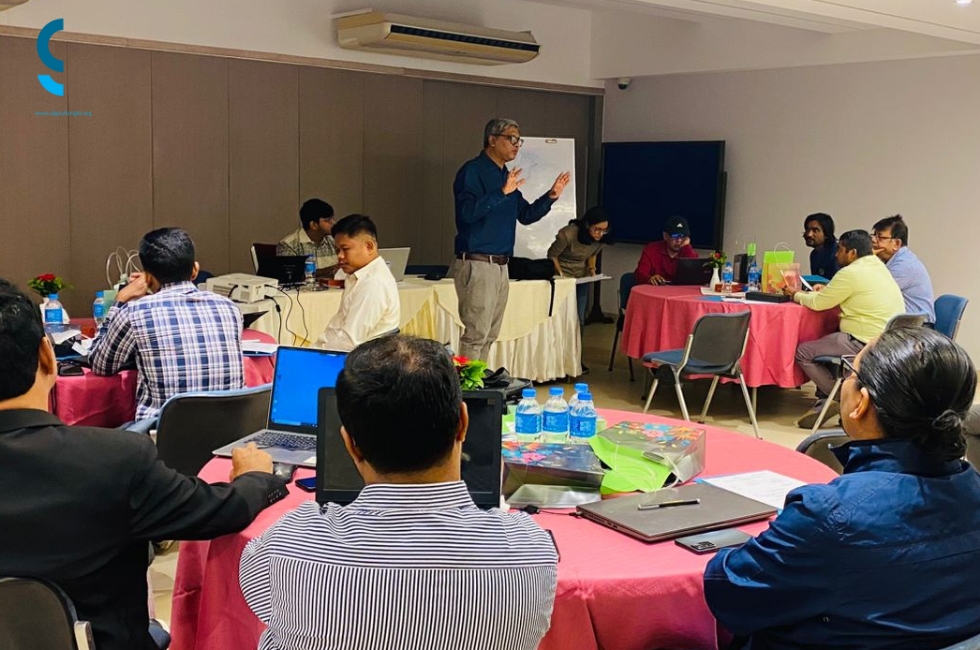
Digitally Right curated a specialized three-day residential curriculum aimed at instilling a safety-first culture. By training four distinct groups divided by gender and region—Dhaka-based and Out-of-Dhaka—the programme addressed the specific nuances of different reporting environments. A total of 54 participants (29 male, 25 female) attended the four training sessions.
The first day of each cohort focused on the physical frontline of journalism, where participants engaged in in-depth sessions on risk assessment and situational awareness. While every group mastered risk management diagrams and personal security protocols for political rallies, the training was adapted to regional contexts. For the Out-of-Dhaka cohorts, emphasis was placed on field experience through sessions led by veteran correspondents such as Kaosar Soheli, focusing on managing aggressive crowds and navigating access with law enforcement in rural settings.
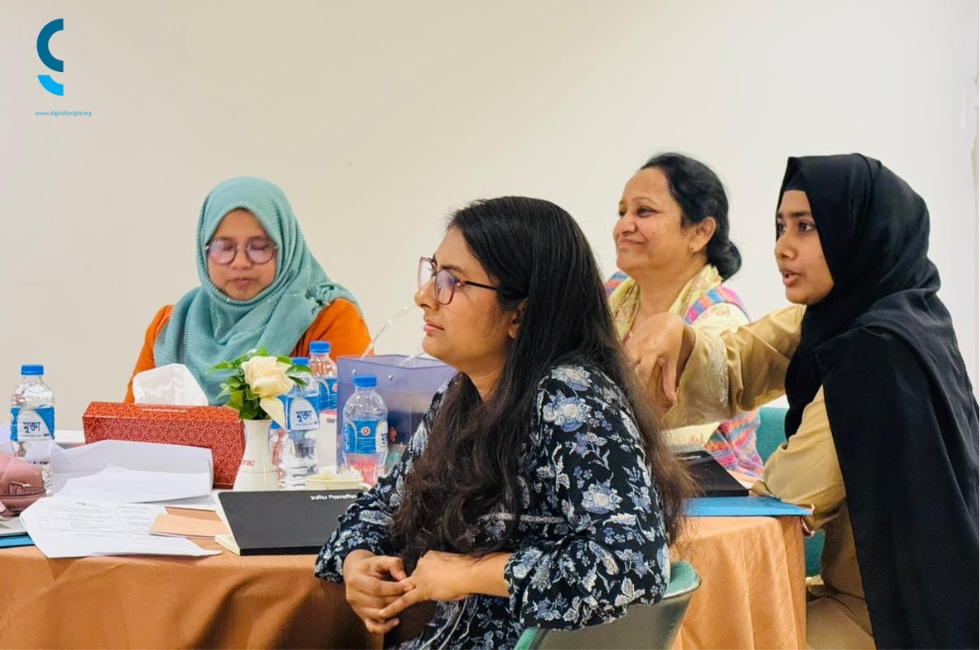
Conversely, the Dhaka-based cohorts received a specialized evening session on emergency first aid and basic life support, conducted by experts from the Bangladesh Red Crescent Society. During these sessions, journalists practiced life-saving skills such as CPR and hemorrhage control, which are critical in the high-intensity environments of the capital.
On the second day, the curriculum shifted to digital safety. Participants established a baseline for digital hygiene while learning technical essentials such as account security through password managers and two-factor authentication. A major component of this day focused on the secure evidence ecosystem, where journalists were introduced to best practices for encrypted evidence capture and secure file sharing. These practices help ensure that sensitive footage remains protected even if a device is seized or compromised. The sessions also covered safe communication methods using end-to-end encryption, as well as privacy-focused browsing practices designed to protect sources and metadata from digital surveillance.
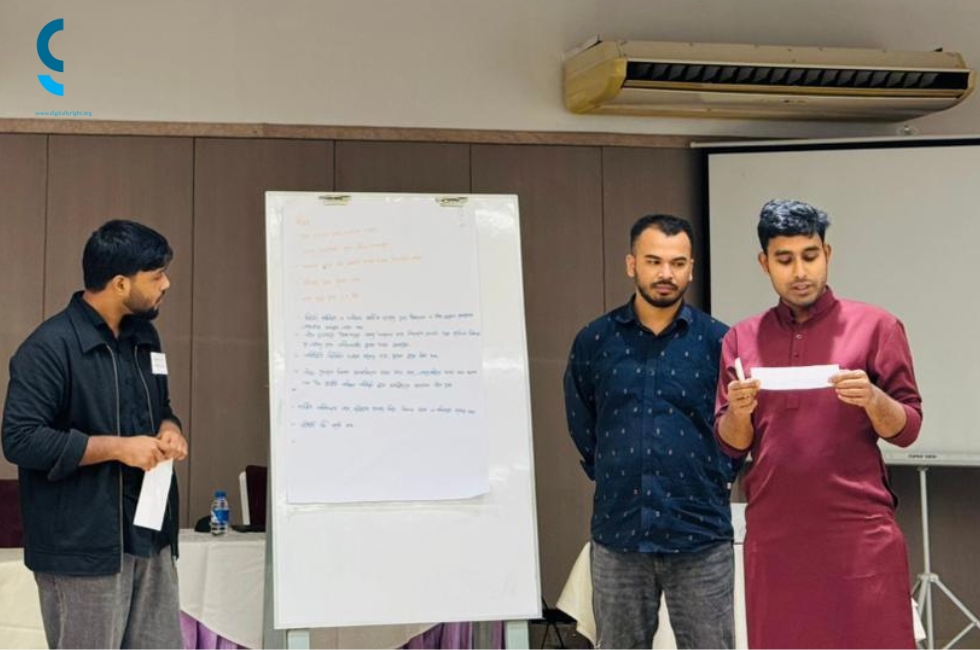
The final day of the training addressed the information war and the rising tide of online harassment. Participants were trained in advanced online search techniques, Boolean logic, and the use of verification methods to identify and debunk manipulated or AI-generated content. While core verification skills were shared across all groups, practical exercises varied slightly by cohort. The sessions also focused on online archiving and documentation, alongside planning exercises specifically designed to verify information circulating during the critical night before an election.
To measure the effectiveness of the training, DRL conducted rigorous pre- and post-training evaluations, which indicated a significant increase in participant confidence. Journalists who initially expressed vulnerability regarding digital surveillance concluded the programme with a more proactive and resilient verification mindset.