
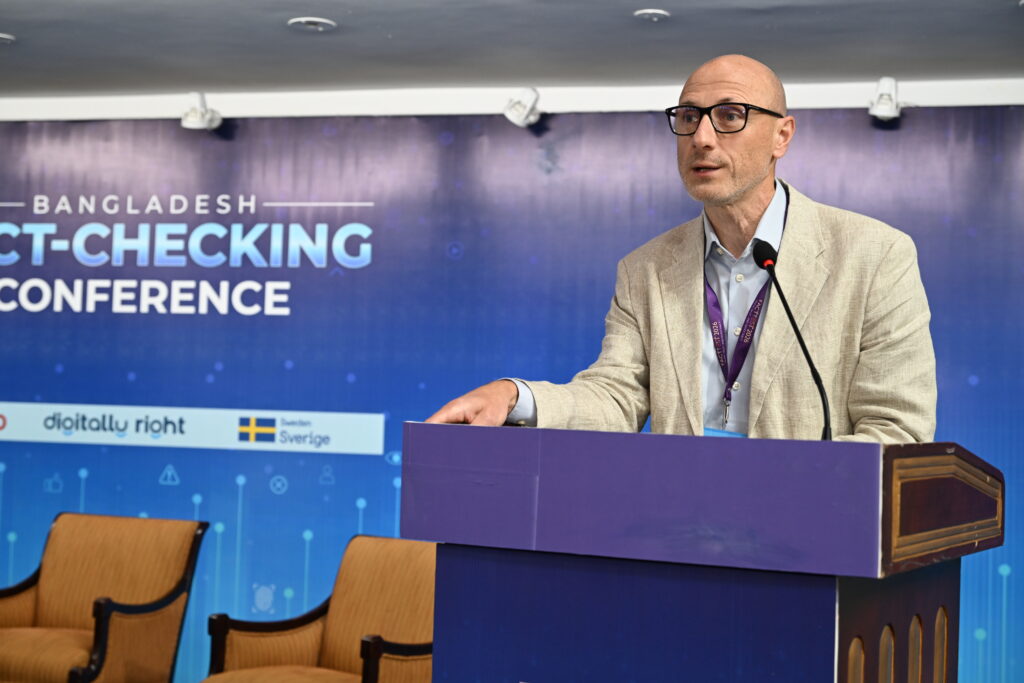
Fact-checking is no longer only about establishing what is true; it is also about finding ways to make verified information reach audiences and earn their trust, said Paul Rapacioli, director of Fojo Media Institute, in his keynote at FactFest 2026.
Delivering the keynote, titled “Making Truth Travel,” Rapacioli reflected on how the information environment has changed over the past decade and why fact-checkers need to think beyond simply correcting false claims.
Paul said, “On this particular November afternoon in 2016 I was sitting in a café near my office when I received an email from a reader of The Local. He was writing from England and he wanted to know if it was true that Sweden had banned Christmas lights.
“Now, I didn’t need to do much fact-checking. I just had to look out of the window to see a whole street full of Christmas lights sparkling in the November gloom. I wrote back to him and told him, no, Sweden had not banned Christmas lights. But I was curious to know where this strange – and obviously untrue – idea had come from.”
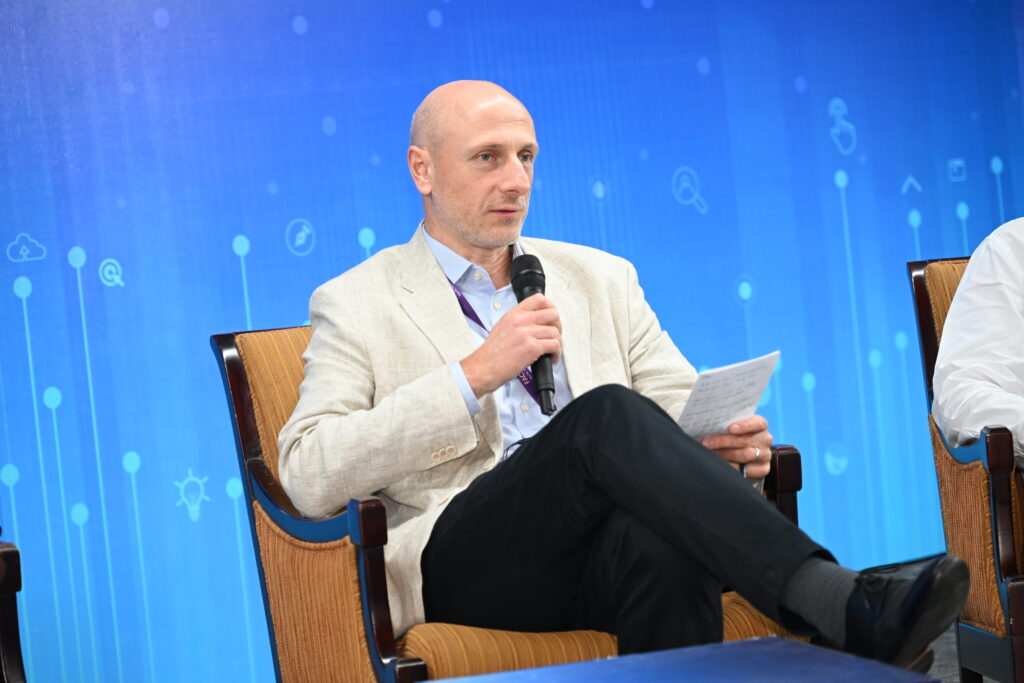
A Swedish public broadcaster reported a routine local decision by the Swedish Transport Administration that Christmas lights could no longer be hung from certain lamp posts due to technical, legal and safety reasons.
The story was unremarkable until a small news website translated it into English. But they added a sentence suggesting that the decision was really about religion, about toning down Sweden’s Christian traditions.
Although the original decision had nothing to do with religion, but that became the message that travelled through websites, blogs and social media, reaching an audience hugely larger than the original report.
Rapacioli shared what followed: “The fact-checking website Snopes debunked it. A Swedish fact-checking team produced a video explaining what had actually happened…At The Local, we invited readers to send us photographs of Christmas lights in their towns.
“We got a lot of photographs! And then for years afterwards we ran a humorous piece about how Sweden still hadn’t banned Christmas lights.”
For Rapacioli, the episode demonstrated how a small piece of truth can be removed from its context, given a new meaning and turned into something entirely different.
“The fact-checkers’ video and our readers’ photographs were attempts to do something more than correct the record. We were trying to give people something worth paying attention to – and perhaps something to share themselves,” he added.
The keynote also explored why people share misleading information. Rapacioli noted that people may be drawn to information because it connects something real to beliefs they already hold, provides an explanation for their problems or confirms their sense of belonging to a particular community. As a result, a fact-check may correct a claim without addressing the reason it appealed to someone in the first place.
He urged fact-checkers to think creatively about how they present evidence, arguing that a good investigation can itself become a compelling story by showing audiences not only what is true, but how that conclusion was reached. “Truth has to be established. Truth has to travel. And truth has to be trusted when it arrives,” he said.
Rapacioli continued, “Now, I don’t think fact-checkers should all rush off and become influencers. And I certainly don’t think we should confuse having a large audience with being trustworthy. But there is something to learn here.
“Creators understand the importance of a recognisable voice. They understand regularity. Familiarity. Personality. They know that people are more likely to listen when they feel they know the person who is speaking to them. And they understand how to make complicated subjects accessible. What could fact-checking learn from that?”
“Perhaps an investigation is introduced by a recognisable person rather than an anonymous institutional account. Perhaps a thirty-second video leads people towards a detailed investigation rather than trying to replace it,” he added.
“There are things you can learn from creators without compromising a single fact.
And the relationship matters. If someone knows who you are and has seen you explain your methods, they may be more willing to listen when your findings challenge something they believe,” said Rapacioli.
He also highlighted the growing influence of social media platforms and content creators in determining how people encounter news. Artificial intelligence presents another shift in how audiences access verified information, he added. AI assistants can summarise or assess news and sources without users necessarily seeing the original evidence. This creates a new challenge for fact-checkers: they may conduct detailed investigations while an AI system becomes the intermediary that presents their findings to audiences.
He concluded by emphasising the value of collaboration among fact-checkers, journalists, researchers and open-source intelligence practitioners. Methods, tools and investigative findings can be shared across organisations and borders, allowing professionals to respond to an information environment that increasingly crosses languages and national boundaries.