
Gendered disinformation has evolved far beyond standard political criticism, now actively targeting women through sexualised narratives, misogynistic stereotypes, and vicious attacks on their character.
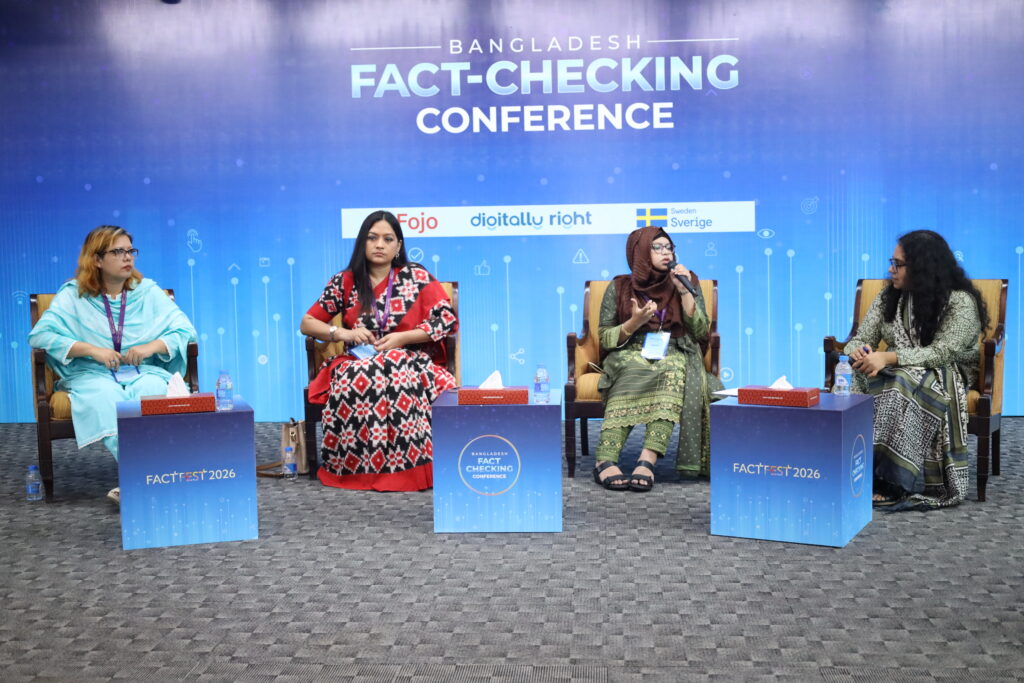
This pressing issue was the focal point of a panel discussion titled “Gendered Disinformation in the Political Landscape” at FactFest 2026, where experts examined how such coordinated campaigns are deliberately designed to hinder women’s participation in public and political life.
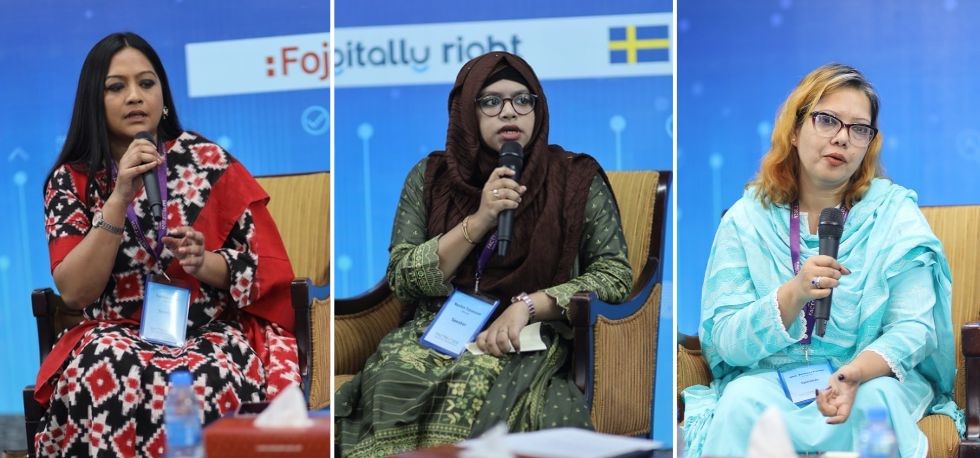
Organised by Digitally Right on September 27–28, the session brought together fact-checkers, journalists, academics, and political figures to discuss Bangladesh’s rapidly evolving misinformation landscape. Moderated by Abdullah Titir, head of Research at Digitally Right Limited, the panel featured Noshin Tabassum, research officer at Dismislab; Anwara Parvin, fact-checker at FactWatch; and Tajnuva Jabeen, an organiser of political platform Alternatives.
The discussion delved deep into the language, patterns, and severe political costs of gendered disinformation, analyzing the roles of social media platforms, policymakers, and fact-checkers in mitigating this digital violence.
A weapon of silencing and double standards
Addressing the core nature of these attacks, Noshin Tabassum highlighted that the phenomenon has shifted from mere misinformation to a targeted silencing tactic.
“Gendered disinformation is no longer just misinformation; it has become a weapon actively used to suppress and silence female activists and politicians,” Tabassum stated. She pointed out the stark double standards in how society views public figures based on gender. “Male politicians are judged primarily by their political identity and actions. But for a female politician, her ‘female’ identity is brought to the forefront first. Her statements and political views are often overshadowed by intense scrutiny over what she wears or how she conducts herself.”
AI manipulation and threats to families
Despite the severe nature of these attacks, Tajnuva Jabeen offered a perspective of growing resilience among female political actors.
“In my observation over the last two years, the number of women leaving politics due to gendered disinformation has actually decreased. Many have overcome it,” Jabeen noted, though she acknowledged that almost all active female politicians are victims of these campaigns. “There is a positive side to this; it has built a resistance within us and strengthened our morale day by day.”
However, Jabeen highlighted that the psychological toll reaches a breaking point when families are targeted. She also warned of the rising danger of manipulated visual content. “Raising questions about a woman’s clothing is a primary tool to portray her negatively. Now, perpetrators use AI to superimpose embarrassing or inappropriate outfits on women. This is particularly dangerous because our marginalised supporters often cannot verify whether an image is AI-generated or real, and this disinformation deeply impacts their perception,” she explained.
Amidst these challenges, Jabeen acknowledged the vital role of verifiers, noting, “Fact-checkers are now the closest friends of politicians.”
Female leadership thinning
Anwara Parvin drew attention to how this digital harassment silently thins the ranks of female leadership, referencing recent political movements.
“We saw a massive participation of women during the ’24 movement, but a large portion of them are no longer active in mainstream politics. When we look for the reasons, the impact of gendered disinformation is a major factor,” Parvin observed.
She emphasised that fact-checkers alone cannot solve the crisis. “Fact-checkers can debunk a rumor, but we cannot make policies. If those responsible for policymaking take this issue seriously and take rapid, strict actions, controlling this menace will become much easier.”
Parvin also urged the government to facilitate their work, adding, “To debunk information, we often need to contact key politicians or high-ranking government officials. If our access to them is made easier, we can publish reports faster, which significantly reduces the scale of the harm.”