
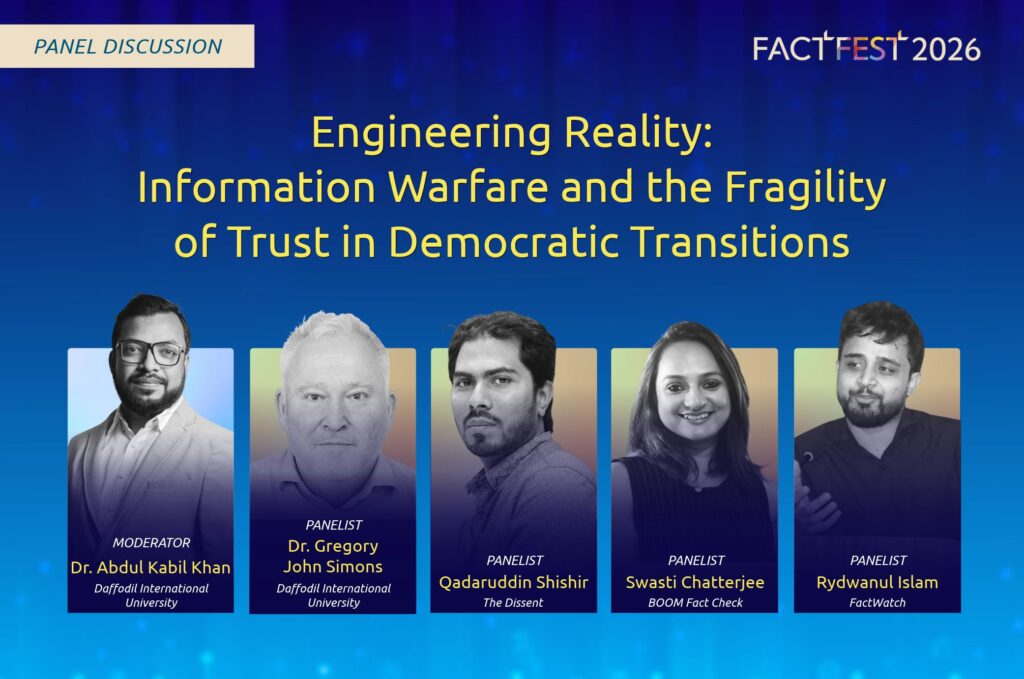
What is the role of information and knowledge: is it to inform the public or influence the public? asked Dr Gregory John Simons, professor at the Department of Journalism, Media and Communication at Daffodil International University, during a session at FactFest 2026 being held on September 27 and 28.
“If information is free to access, it is about influence. That’s the main point: you want to get your message across to an audience. Whereas if you are using a paywall, it’s about financial reward. Another point is about the role of strategic competition, where different actors plant or take information and use it for their advantage against an opponent or a target,” he said.
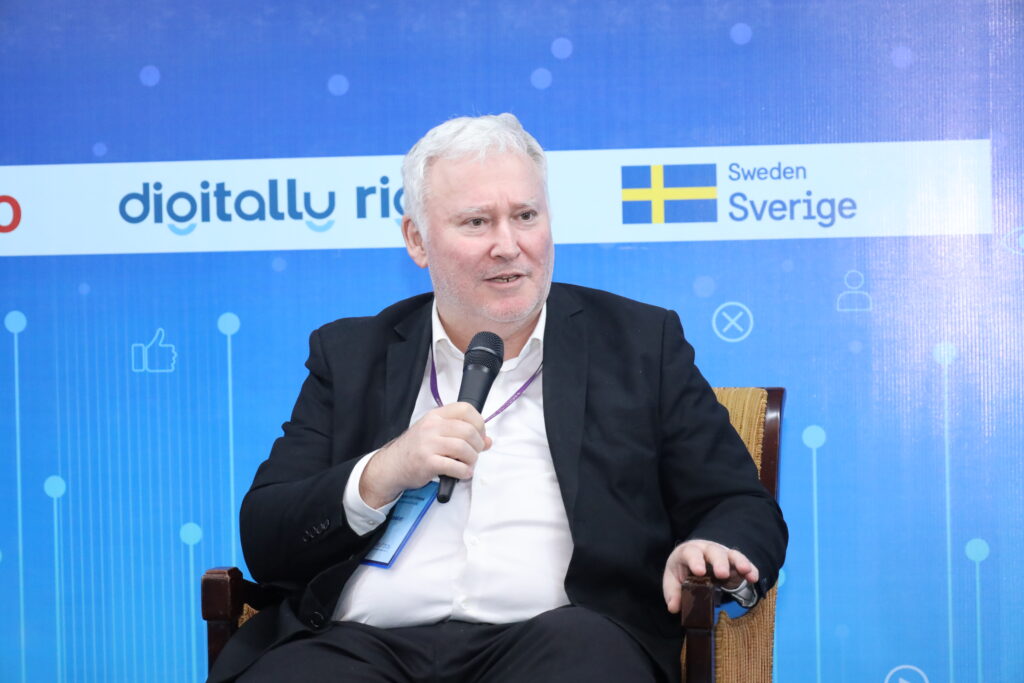
The discussion took place during a session titled “Engineering Reality: Information Warfare and the Fragility of Trust in Democratic Transitions,” which brought together experts from journalism, fact-checking, academia and digital policy to discuss how information can be used as a tool of political influence and warfare, particularly during periods of political transition.
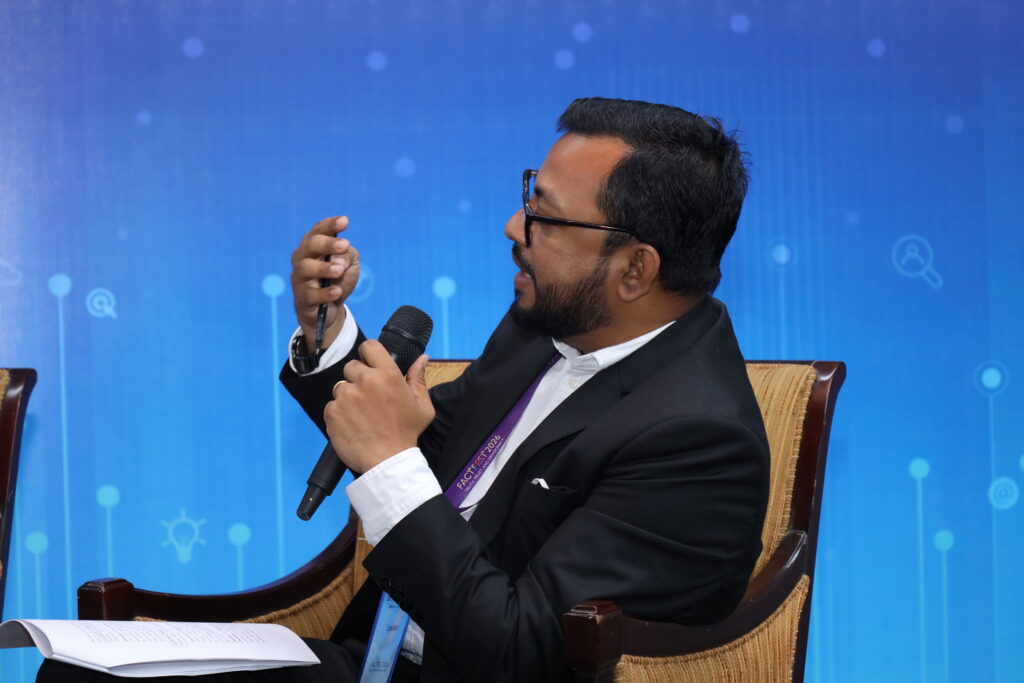
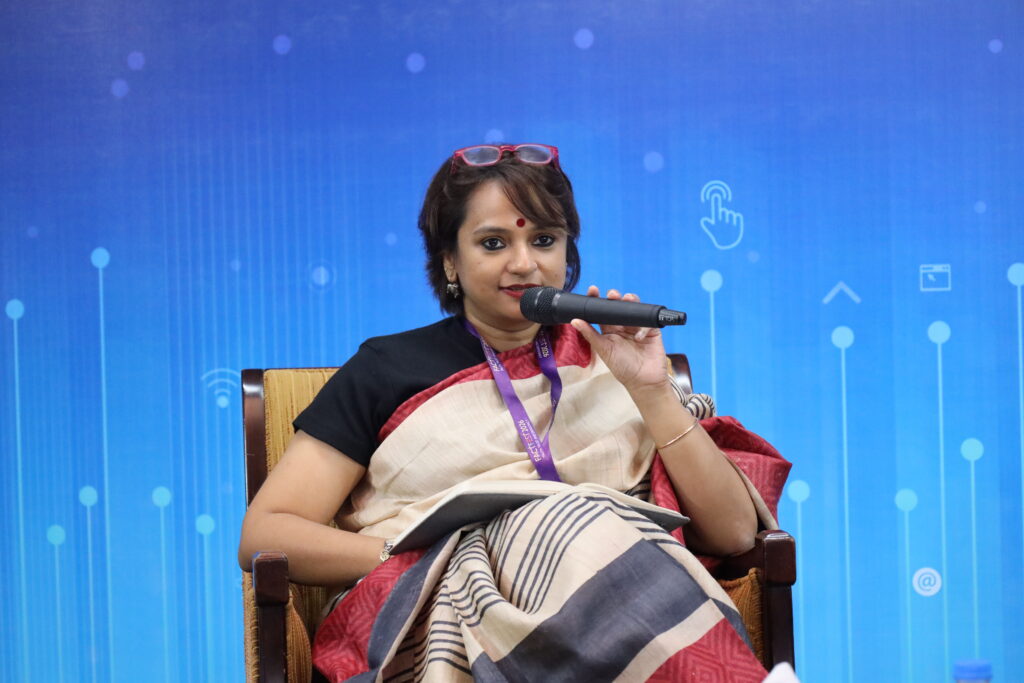
Among other speakers of the session were Qadaruddin Shishir, editor of The Dissent; Swasti Chatterjee, deputy editor (News) and project coordinator in Dhaka and Yangon at BOOM; and Rydwanul Islam, senior fact-checking Professional at FactWatch. Meanwhile, Dr. Abdul Kabil Khan, associate professor and head of the Department, Department of Journalism, Media and Communication, Daffodil International University, moderated the session.
Regarding Bangladesh’s information landscape, Simons said the country is experiencing several competing social trends.
“A society that is traditionally patriarchal and which is based on hierarchy in terms of age and position in society is currently being challenged by three different somewhat contradictory trends or processes,” he said.
“One is empowerment of youth after the 2024 uprising. But also the increasing role of women in society, which is seen in politics and other areas. Third is the increasing role of religion in society. And this means that this information becomes more pronounced because you’ve got greater competition.”
The discussion comes as Bangladesh is navigating a period of political transition, with public trust in institutions and the media facing significant pressure. In such an environment, speakers examined how information manipulation can add to existing political divisions and affect how citizens understand unfolding events.
From fact-checking to verification
Another speaker, Swasti Chatterjee, deputy editor (News) and project coordinator in Dhaka and Yangon at BOOM, contributed a regional perspective on information manipulation and fact-checking.
“So in India, and in the Indian information ecosystem, something that we are noticing right now is that there are different variations of truth. There is not one variation of truth. And that is why, as a fact-checker, it is becoming extremely and increasingly difficult for us to fact-check. So we are no longer calling ourselves fact-checkers. We are also trying to portray ourselves as news verification experts,” she said.
She said fact-checkers are trying to evolve beyond traditional fact-checking by taking on a more investigative role.
“(We are trying) to evolve more than fact-checkers, where we can call ourselves as investigative journalists who are not only using Open-Source Intelligence (OSINT) but are also on the ground and fact-checking.”
Chatterjee said basic verification techniques such as reverse image searches and AI-detection tools can now be used by the general public. For fact-checkers, she argued, the focus therefore needs to extend to on-the-ground investigation.
She also discussed the challenge of reaching audiences in an environment where misinformation can spread rapidly across platforms. As funds are getting limited, there are limitations, but fact-checkers do not have restrictions.
“So, we are trying to multitask. You have to put in that effort to make it reach people. If the misinformation is viral in a particular platform, say an Instagram post, we will do a fact-check which is Instagram-friendly. And this has to be instant,” she explained.
The panel also considered the challenges created by new technologies, which have made it easier to produce and distribute convincing fabricated content. Manipulated images, impersonation and other forms of synthetic or misleading media can circulate rapidly, making it increasingly difficult for audiences to distinguish authentic information from coordinated attempts to influence perceptions.
Qadaruddin Shishir, editor of The Dissent, discussed the challenges media organisations face when conducting digital investigations.
On how The Dissent differs from other media organisations, Shishir said, “Here come two issues. One, they don’t have the capacity in the newsroom to do digital investigations. Two, in our country, digital investigations are mostly political in nature. An investigation is going to harm someone’s reputation eventually. So the media tend to not do such investigations to avoid political tagging.”
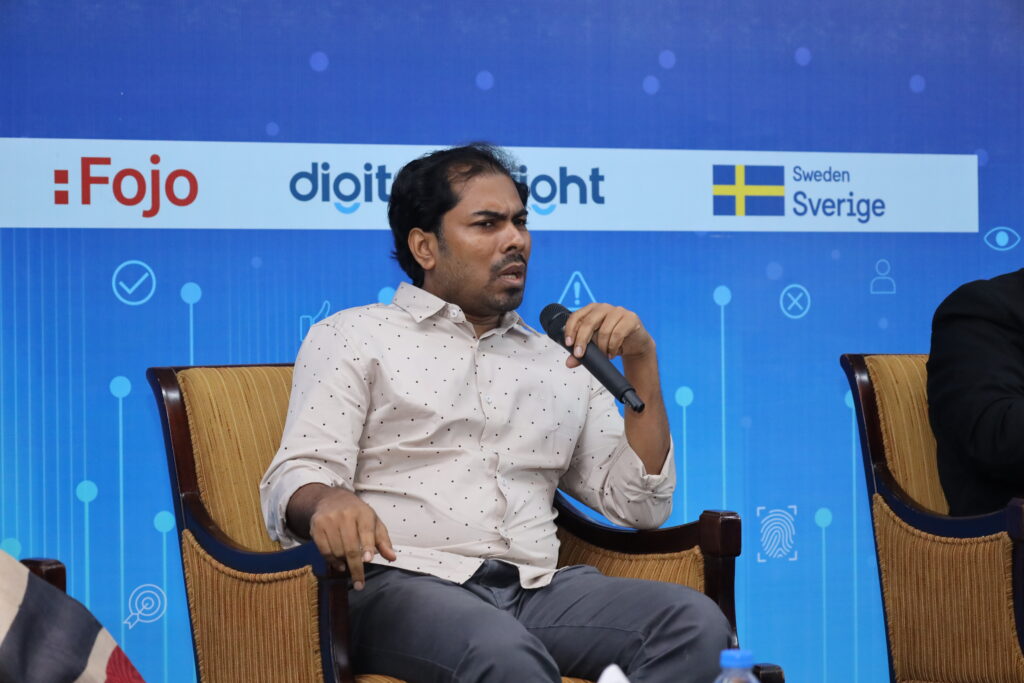
His comments highlighted both newsroom capacity and the political sensitivity surrounding digital investigations in Bangladesh.
Rydwanul Islam, senior fact-checking Professional at FactWatch, spoke about the pressure on fact-checkers during major events, particularly elections.
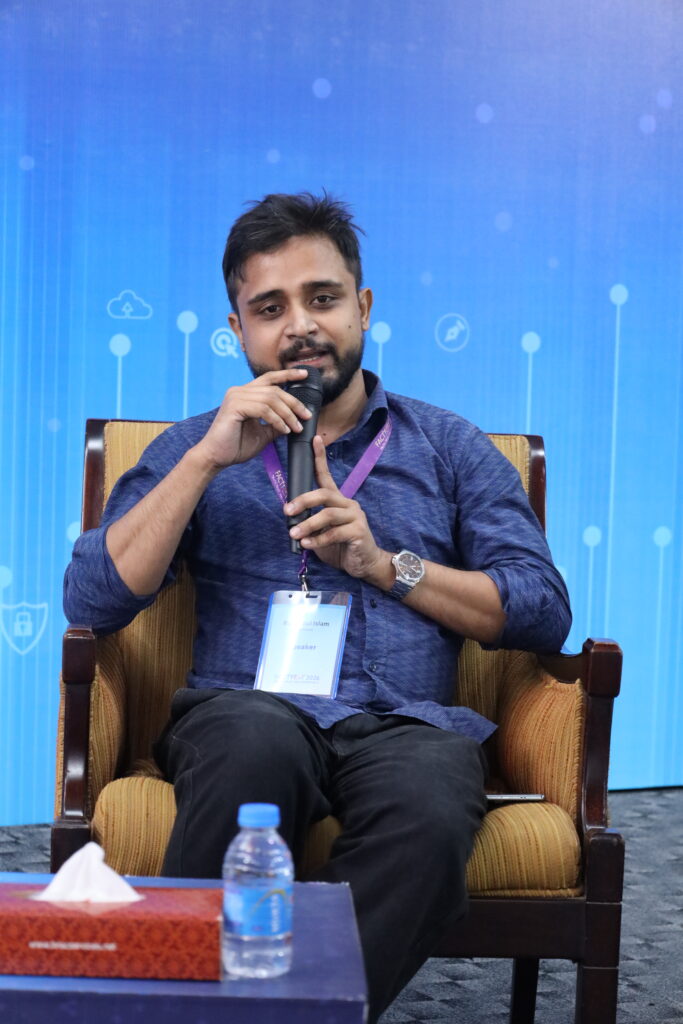
“In emergency situations, we do have to work relentlessly. For example, during election time, we worked for almost 24 hours. We monitored social media intensely, so that tiny bit of misinformation would not be missed. As we are Meta’s partner in fact-checking, we have the duty to reduce harmful content on the platform,” he said.
‘Those who control the facts define reality’
Simons returned to the broader question of how information shapes public understanding and political agendas.
“Understand what facts do. Facts, those who control the facts, define reality for us and therefore can set the agenda. Those who are defined by facts are reactors and react to the agenda,” he said.
He also distinguished between rational and emotional forms of human reasoning, arguing that education should focus on how people think rather than simply what they should think.
“And there are two aspects to human logic. There is rational logic and emotional logic. And, as our education system mostly does, they don’t teach how to think; they teach what to think. And fact-checkers should be part of that, rather than moving against it.”