
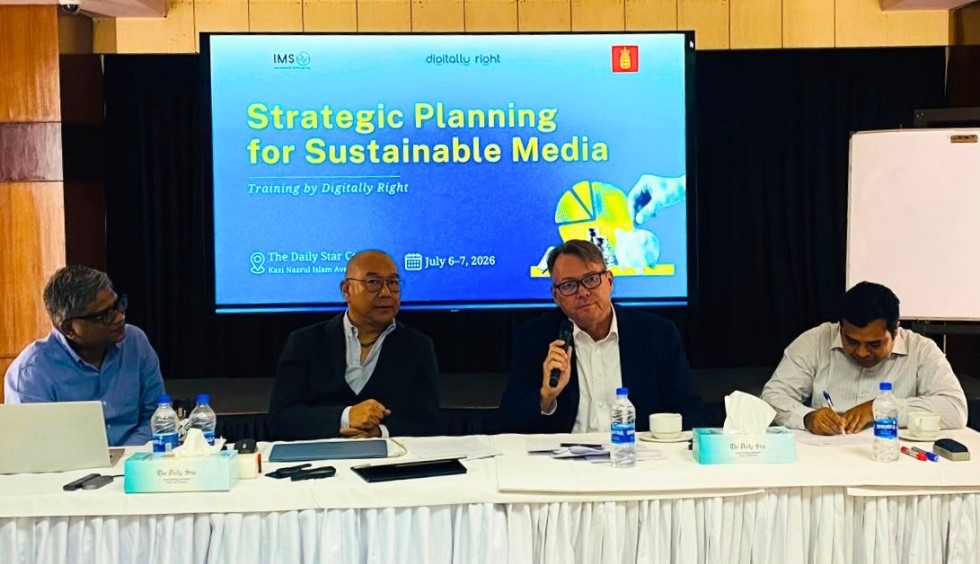
The media landscape in Bangladesh is undergoing rapid transformation as audience consumption habits increasingly shift toward digital platforms. Media outlets face challenges due to changing audience behaviour in the information ecosystem. While many outlets have a digital presence, gaps remain in developing diversified revenue strategies to generate a stable income.
To address these challenges, Digitally Right Limited (DRL), with support from International Media Support (IMS), organized two Media Revenue Diversification Trainings from 06 July to 09 July, 2026. The aim of this training was to support the media outlets to localise and diversify revenue strategies beyond the major social networking platforms and introduce global good practices in digital revenue generation.
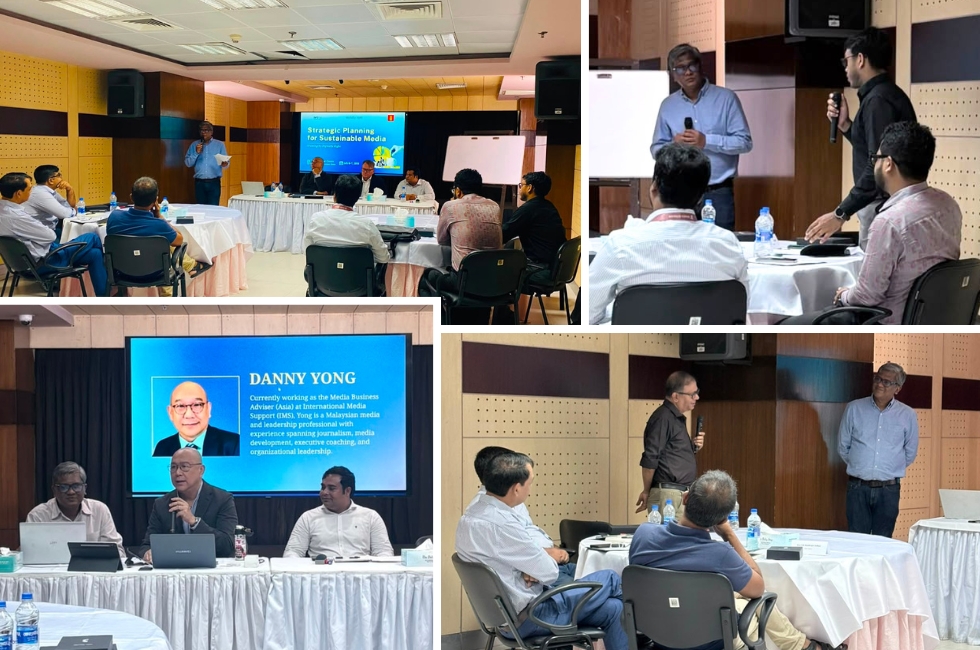
The evolving media ecosystem requires organizations to bridge the gap between editorial practices and financial viability. Recognizing that different organizations face unique operational realities, the first training consisted of 14 participants from traditional media outlets, while the second featured 13 participants from emerging media outlets.
Facilitated by Danny Yong, Media Business Adviser, Asia, IMS, the curriculum followed a structured progression from audience understanding to formal business planning. The first day heavily emphasized marketing strategy, guiding participants through audience segmentation, differentiation, and drafting precise brand positioning statements. On the second day, the focus transitioned to operational execution using the Business Model Canvas (BMC). Participants broke down fundamental media revenue models, mapped out customer relationships and distribution channels, and synthesized these elements into a comprehensive business plan.
While the traditional media participants focused on reconciling traditional practices with modern financial needs, exploring how to balance editorial independence with viewing news as a product the emerging media participants focused on translating social media reach into actual revenue and pitching to funders to initially sustain themselves.
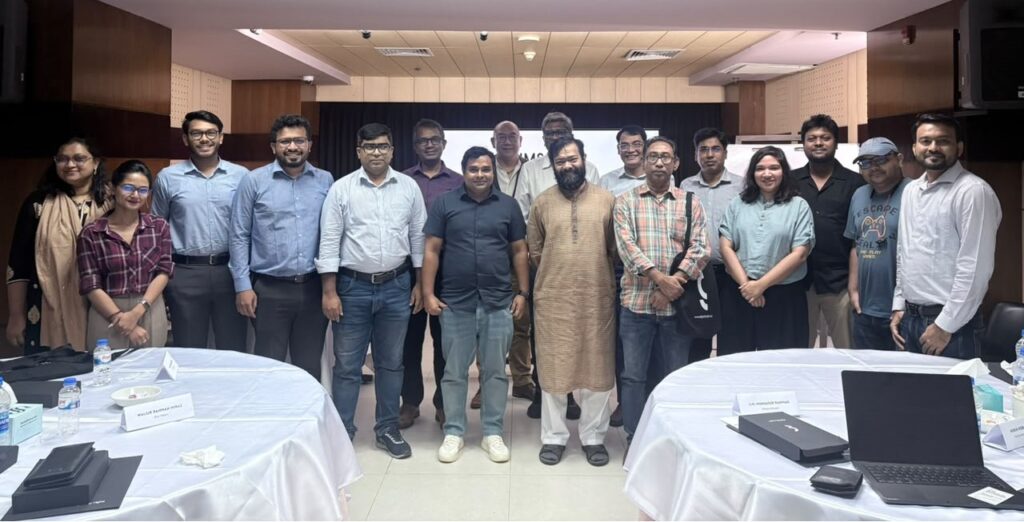
A primary outcome of the training was a fundamental shift in how participants view their readership. Instead of treating the audience as an anonymous mass, participants embraced the value of targeted segmentation. A participant from a legacy outlet observed that a proper “segmentation structure will optimize work previously done simply by intuition,” while a founder of a climate change platform noted that explicitly “identifying the audience helped narrow our focus for target-oriented content.”
Beyond perspective shifts, the sessions initiated concrete steps toward product innovation. For example, following the training, one organization began developing plans for a paid newsletter for policy experts, while another identified skill-building workshops for aspiring migrant laborers as a potential new revenue stream.
While the training sparked innovative ideas, it also highlighted a clear demand for ongoing investment in media sustainability. Participants across both legacy and independent platforms emphasized that short-term training is just a starting point. Moving forward, the media professionals expressed a strong need for continuous mentoring, deeper training on audience analytics, and opportunities to connect with peers navigating the same challenges in the digital economy.