
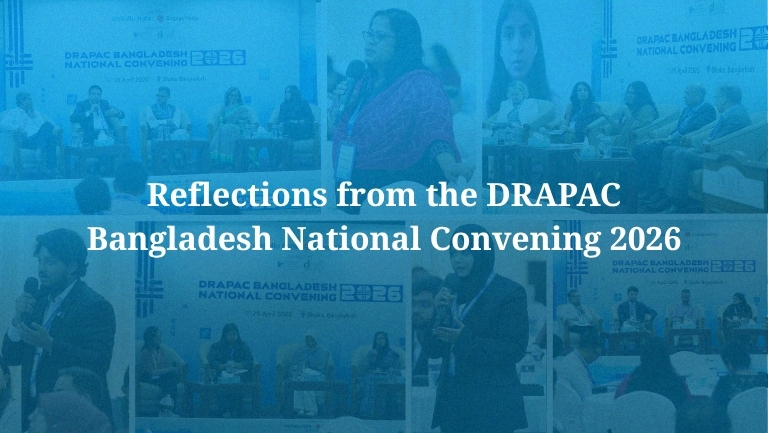
As Bangladesh continues to shape its evolving digital governance landscape, creating spaces for inclusive dialogue has become more important than ever. The DRAPAC Bangladesh National Convening 2026, held on April 28, 2026, brought together over 100 participants from government institutions, civil society, academia, the private sector, and media to explore how a more inclusive, participatory, and responsive approaches to digital governance can be achieved in Bangladesh.
Organized by Digitally Right in collaboration with EngageMedia, and supported by session partners Transparency International Bangladesh and Dnet, the convening provided a platform for stakeholders with diverse experiences and perspectives to exchange ideas, reflect on emerging challenges, and explore pathways toward more inclusive policymaking.
Throughout the day, discussions examined the opportunities and complexities of governing digital spaces in a rapidly changing environment. While participants approached these issues from different perspectives, a common theme emerged across conversations: the importance of ensuring that policy processes are informed by meaningful participation and engagement from the communities they affect.
The convening also reflected a growing recognition that conversations about digital governance must extend beyond traditional policy spaces. The participation of students and young people alongside policymakers, researchers, industry representatives, and civil society actors highlighted the value of bringing a wider range of voices into discussions that will shape the future of Bangladesh’s digital ecosystem.
What’s Next?
The DRAPAC Bangladesh National Convening 2026 reaffirmed the importance of sustained dialogue across sectors and communities. As digital technologies continue to influence nearly every aspect of public life, building opportunities for engagement, collaboration, and exchange remains essential to developing inclusive and responsive approaches to digital governance.
We extend our gratitude to all speakers, participants, and partners whose contributions made the convening possible. Digitally Right remains committed to fostering spaces that encourage constructive dialogue and strengthen collaboration on issues affecting rights, participation, and governance in the digital age.