
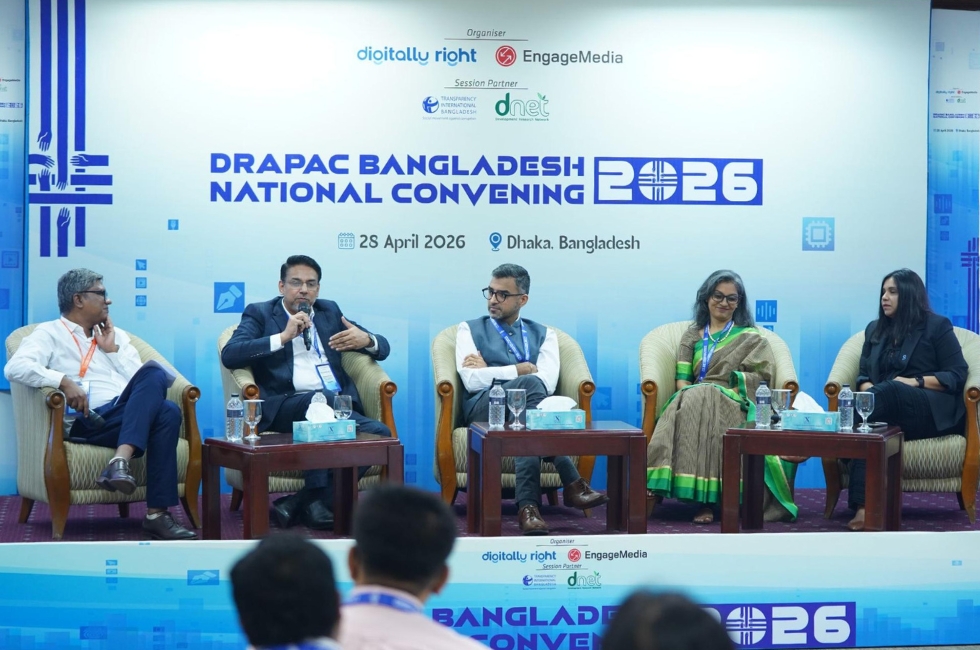
As Bangladesh enters a new political cycle following the February 2026 national election, it opens a rare policy window in which digital governance frameworks are being rapidly developed and redefined, including major laws and emerging policy instruments on cybersecurity, data protection, telecommunications, and artificial intelligence. While these developments signal efforts to modernize digital governance, they also raise important concerns around transparency, meaningful public participation, and the protection of fundamental rights in an environment marked by surveillance risks, online harms, and restrictions on expression.
In this context, for the second time, Digitally Right Limited (DRL) hosted the DRAPAC Bangladesh National Convening, 2026, in partnership with EngageMedia, with Transparency International Bangladesh (TIB) and Dnet as session partners. The Convening was held on 28 April 2026 at the Bangladesh-China Friendship Conference Center in Dhaka. It brought together more than 100 participants from across sectors, including government representatives, civil society organisations and human rights defenders, private sector and telecom industry representatives, media professionals, academics, and youth leaders.
This year, the convening was grounded in the theme “Meaningfully Inclusive Policy Making,” which emphasizes that digital policy must be inclusive not only in form but also in substance. It called for participatory consultation, representation of affected communities, transparency in policy processes, and strong accountability safeguards. It also recognized that inclusive policy-making is essential for improving legitimacy, reducing blind spots, and developing more balanced and implementable frameworks. The Convening featured an opening plenary followed by three thematic panel discussions.
Hosted by TIB and moderated by Abdullah Titir, Head of Research, Digitally Right, the first plenary discussion, titled “Rights-based Digital Governance: Toward Inclusive Policy Making” brought together a diverse panel featuring Dr. Iftekharuzzaman, Executive Director of Transparency International Bangladesh; Namrata Maheshwari, Senior Policy Counsel and Encryption Policy Lead of Acessnow; Susan Vize, Head of Office and UNESCO Representative to Bangladesh, Asha Mehreen Amin, Joint Editor of The Daily Star, and Muhammad Anwar Uddin, the Additional Secretary of the Ministry of Posts, Telecommunications, and Information Technology.
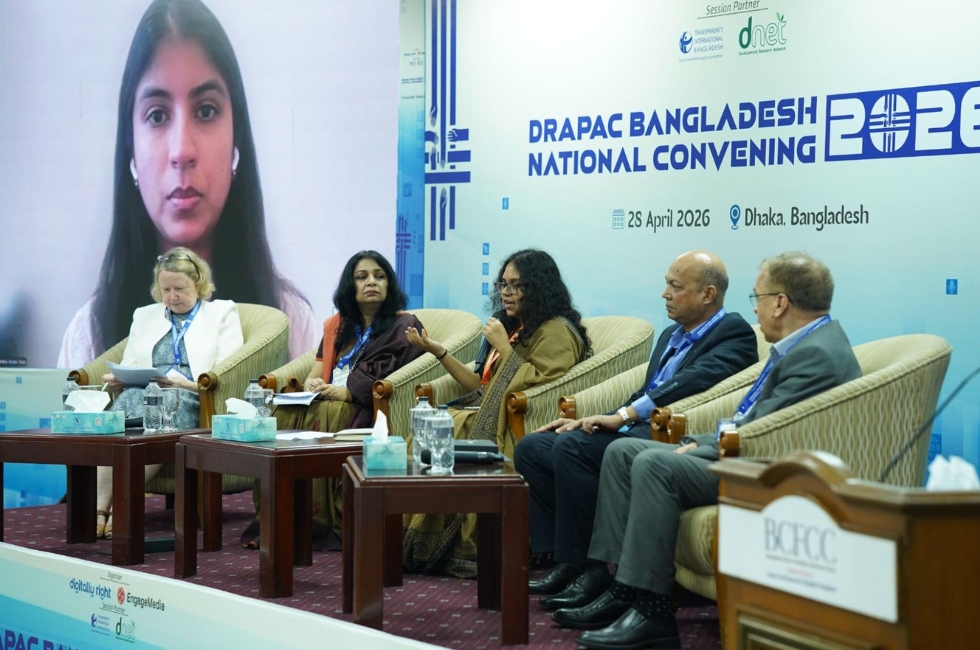
Concerns were raised in this panel about several recently enacted and amended digital laws, highlighting that the inconsistencies across these legal frameworks, along with limited stakeholder consultation during their formulation, risk weakening transparency, accountability, and protections for freedom of expression. While the Additional Secretary defended the legislation as a necessary regulatory framework, he also expressed the government’s openness to amendments where required.
Following the plenary, the second panel organised by Digitally Right, titled “The Illusion of Inclusion: Multi-stakeholder Engagement in Bangladesh’s Digital Governance,” included Ruzan Sarwar, Public Policy Manager at Meta; Pratyush Rao, Head of Public and Regulatory Affairs at Telenor Asia; Sadia Haq, founder of ShareTrip; and Mahmud Hossain, Commissioner of the Bangladesh Telecommunication Regulatory Commission (BTRC) as panelists with Miraj Ahmed Chowdhury, Managing Director, Digitally Right, moderating the session.
The panel pointed to gaps in accountability, regulatory clarity, and inclusive policymaking within Bangladesh’s digital governance landscape. Meta acknowledged ongoing challenges in addressing cross-platform harm while emphasizing plans to strengthen local engagement. The BTRC Commissioner noted that policy outcomes are often shaped by unequal influence among interest groups when Telenor highlighted uncertainty around new telecom regulatory structures and unclear institutional authority. Meanwhile, ShareTrip underscored that local entrepreneurs are largely excluded from policy discussions, limiting their ability to influence laws that directly affect them.
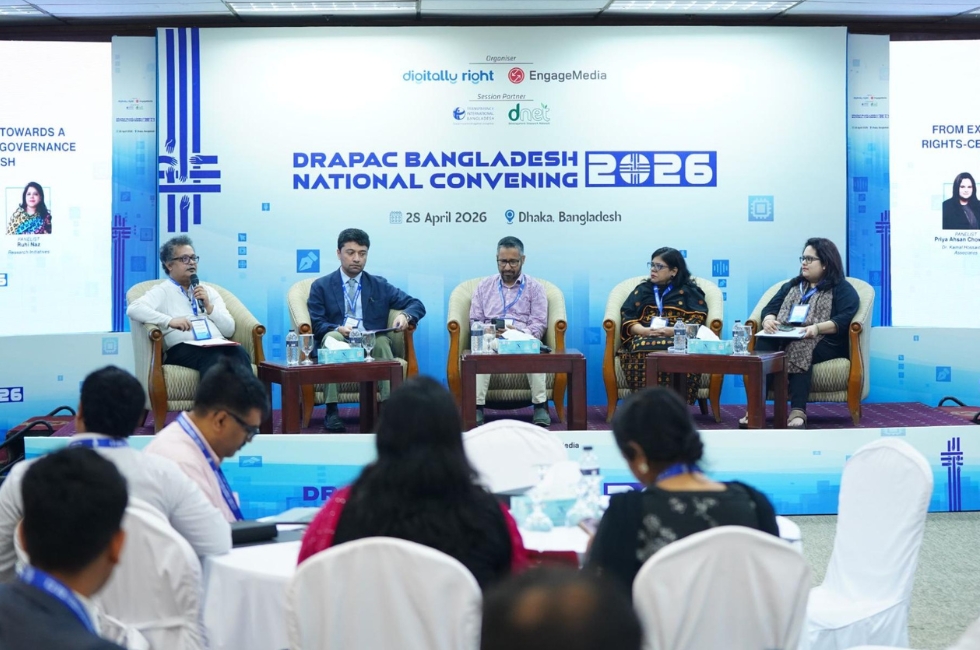
The third session, titled “From Exclusion to Empowerment: Towards a Rights-Centric and Accountable AI Governance Framework for Bangladesh,” explored the challenges of ensuring inclusive, transparent, and rights-based AI governance in Bangladesh. Moderated by Dr. Ananya Raihan, Executive Director of iSocial, the panel featured Sadman Rahman, Consultant, Decent Work in Supply Chains at International Labour Organization; Ruhi Naz, Deputy Director (RTI) at Research Initiatives, Bangladesh; Barrister Priya Ahsan Chowdhury, Advocate at the Supreme Court of Bangladesh and Associate at Dr. Kamal Hossain and Associates; and Rakibul Hasan, CTO of Link3 Technologies.
Discussions focused on the risks of exclusion in AI adoption, particularly for rural and marginalized communities, alongside the need for greater public participation in policymaking, digital accessibility, and workforce preparedness. Emphasizing meaningful engagement, Ruhi Naz noted that “without meaningful consultation, public participation does not exist.” Addressing concerns around employment and automation, Sadman Rahman stressed the importance of using AI for “augmentation” rather than replacing the workforce with AI, arguing that workers should be empowered through reskilling and capacity-building initiatives.
The day ended with the launch of the Tech Policy Fellowship 2024 research papers where the Fellows, Afrida Samiha Nabilah, Research Officer, BLAST; Nazifa Muniyat Quader, Lecturer, Canadian University of Bangladesh; and Tabassum Nuha, Lecturer, Bangladesh University of Professionals, presented their research findings and shared how their research concerns have evolved since the enactment of numerous digital laws. The session was moderated by Aditi Zaman, Assistant Manager, Programme at Digitally Right, who then invited the newly selected Tech Policy Fellowship 2025 cohort on stage and introduced them to the audience.
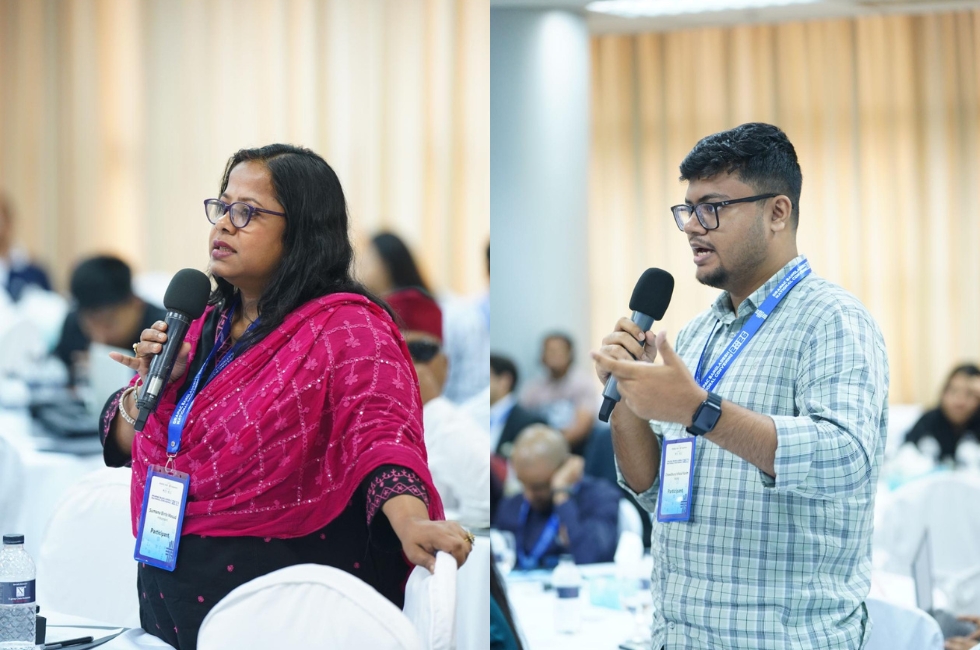
The Convening highlighted the growing need for inclusive, transparent, and rights-respecting digital governance amid rapid policy changes in Bangladesh. Panelists and participants alike emphasized stronger consultation, accountability, and protection of fundamental rights in digital policy-making. Despite differing perspectives, there was a shared understanding that effective digital governance requires meaningful participation from all stakeholders. The convening reaffirmed the importance of continued dialogue to shape a more inclusive and balanced digital future.