
Bangladesh is at a pivotal moment in its democratic journey. Following the July Uprising of 2024, many hoped that press freedom would finally be strengthened under the interim government, driven by a series of commitments and policy reforms. But was press freedom truly strengthened? Physical attacks, legal harassment, online bullying, and mounting pressures to tackle misinformation and disinformation continue to raise concern. For would-be journalists, or those early in their careers, the risks are often daunting. Online harassment, surveillance, and attacks on media institutions make these risks real, immediate, and deeply personal.
Against this backdrop, on 7th April 2026, Digitally Right brought together journalism students and media professionals for a seminar titled “Strengthening Journalist Safety and Media Freedom,” held at North South University (NSU) in Dhaka. The event was held in partnership with the Royal Norwegian, Danish, and Swedish Embassies in Bangladesh, and supported by the Department of Media, Communication, and Journalism (MCJ) at NSU.
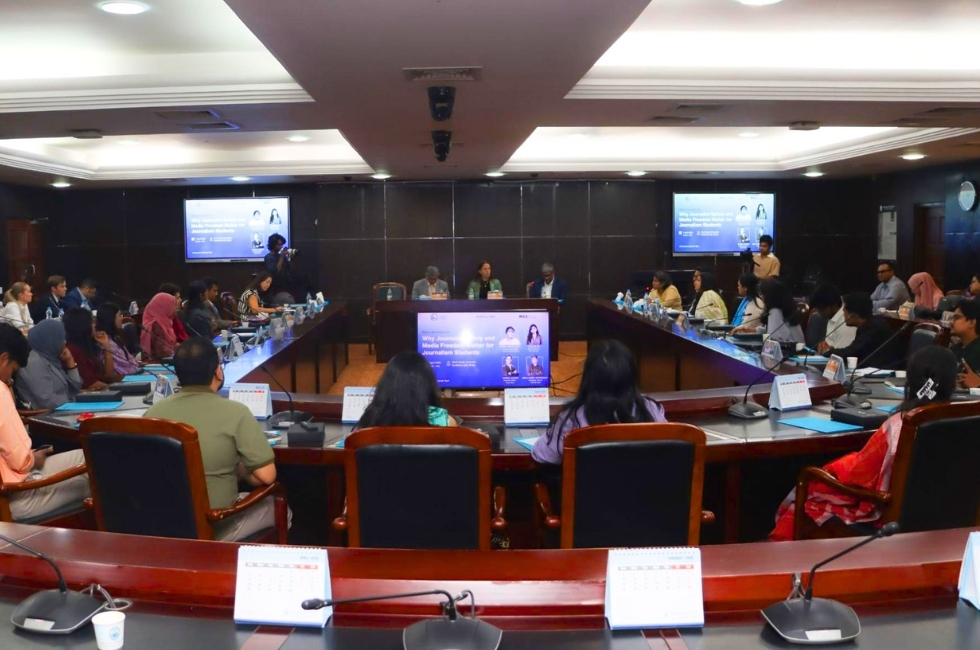
Around 30 participants from different universities joined the discussion. The event gave students a rare chance to hear directly from working journalists and digital security experts about the realities of reporting today.
The opening session set the tone by situating the discussion within the current challenges to press freedom in Bangladesh, attended by Ms. Marianne Knævelsrud, Deputy of the Norwegian Embassy in Dhaka, Prof. Abdul Hannan Chowdhury, Vice-Chancellor of North South University, and Dr. S.M. Rezwan Ul Alam, who heads the Department of Media, Communication, and Journalism.
At the opening, Ms. Marianne Knævelsrud highlighted that inclusive and diverse voices are essential for a democratic society, underscoring the critical role journalism plays in ensuring accountability, representation, and the free flow of information.
Prof. Abdul Hannan Chowdhury, Vice-Chancellor of North South University, said that journalism is difficult all around the world, not just in Bangladesh. However, in Bangladesh, misinformation, disinformation, and propaganda often lead people to impose their ideologies or narratives on others and attack differing opinions. Therefore, journalists must remain ethical to effectively serve society.
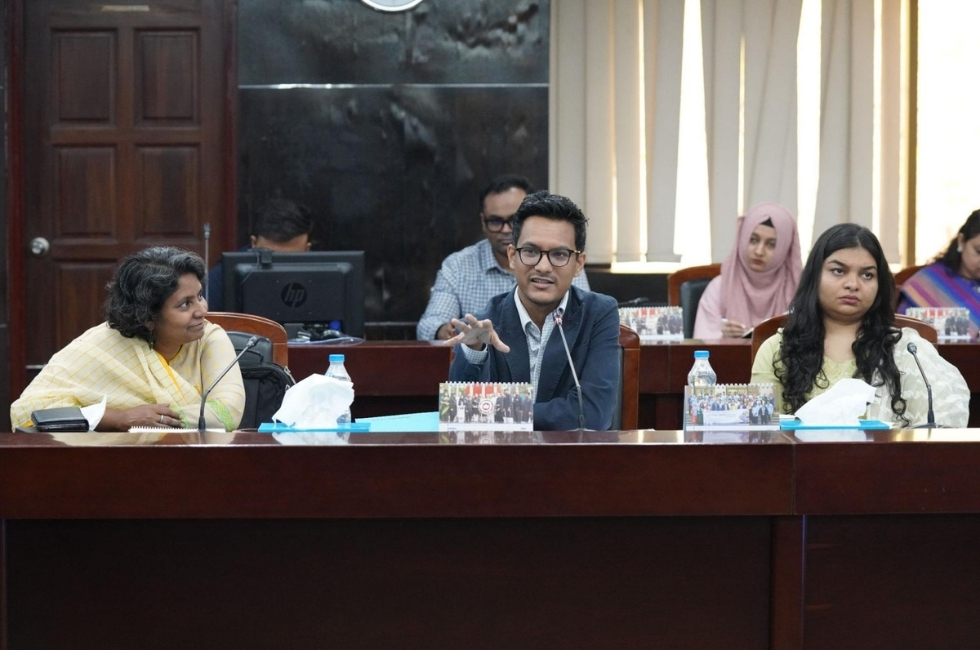
It was followed by a panel discussion titled “Why Journalist Safety and Media Freedom Matter for Journalism Students.” Facilitated by Miraj Ahmed Chowdhury, Managing Director of Digitally Right, the session brought together Sheikh Sabiha Alam (Agence France-Presse), Zyma Islam (The Daily Star), and Nazmul Ahasan (Netra News), who reflected on their experiences and spoke directly to a new generation of journalists.
The discussion opened with a reflection on what it means to report from exile, drawing from the lived experience of Nazmul Ahasan’s work with Netra News. Nazmul highlighted that while it offers some protection to the journalist himself, families of the journalists often face continuous harassment from authorities and surveillance. Those who continue to work with them inside the country are exposed to legal, digital, and personal threats if their identities are revealed. Nazmul added that, unlike the Hasina regime, when threats were clear, journalists today face unpredictable risks, unsure which groups or ideologies they might provoke, raising the stakes significantly.
Sheikh Sabiha Alam added that the risk is even greater for women. She talked about the unique challenges women journalists face in Bangladesh, from hurdles like the lack of something as basic as public toilets, making long hours in the field difficult, limited assignment opportunities, and systemic biases in hiring. Despite these challenges, according to her, “it is rewarding.”
“People rarely get the chance to serve the public, and through good journalism, we have that opportunity,” she added.
The conversation then moved to the recent attacks on Prothom Alo and The Daily Star, two leading dailies, and what it reveals about the risks facing news organizations today. Zyma Islam said that the attack was not an isolated incident, but a stark reminder of the constant harassment journalists face when challenging power. She urged participants not to be intimidated, a sentiment echoed by Miraj Ahmed Chowdhury: “Fear is contagious, courage is more contagious.”
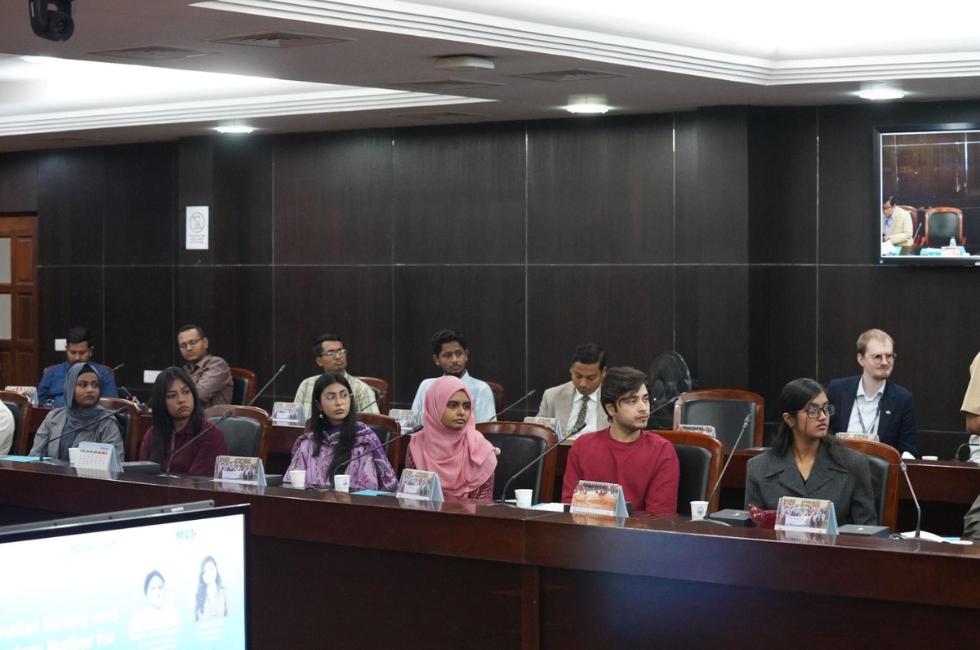
After the panel, student-participants asked the journalists about press freedom, risks of reporting from exile, and editorial censorship. The panel noted that the media is inherently ideological and shaped by political and social pressures and emphasized that the influence of media owners is also a barrier to media freedom.
Following the panel discussion, the session shifted to practical ways to mitigate online risks, with a training conducted by Md. Ashraful Haque, Digital Security Specialist at Digitally Right. The training covered key areas such as device and communication security, identifying malware and phishing attempts, and password management. The session also introduced secure tools and ways to manage digital footprints.
The seminar concluded with remarks from Paola Castro Neiderstam, First Secretary for Human Rights, Democracy, and Gender Equality at the Embassy of Sweden in Dhaka. “Threats to journalism are ultimately threats to democracy,” she said, and affirmed that the Embassy will continue to support journalists in Bangladesh and promote a safe and inclusive media environment.
The event left participants with a renewed sense of purpose, anchored in safety, responsibility, and adaptability, and a conviction that journalism – despite its risks – remains worth pursuing.
The seminar is made possible with the financial support of the Nordic Council of Ministers. The content of the course is the sole responsibility of the coordinators of the project and does not necessarily reflect the views or policies of the Nordic council or Ministers.